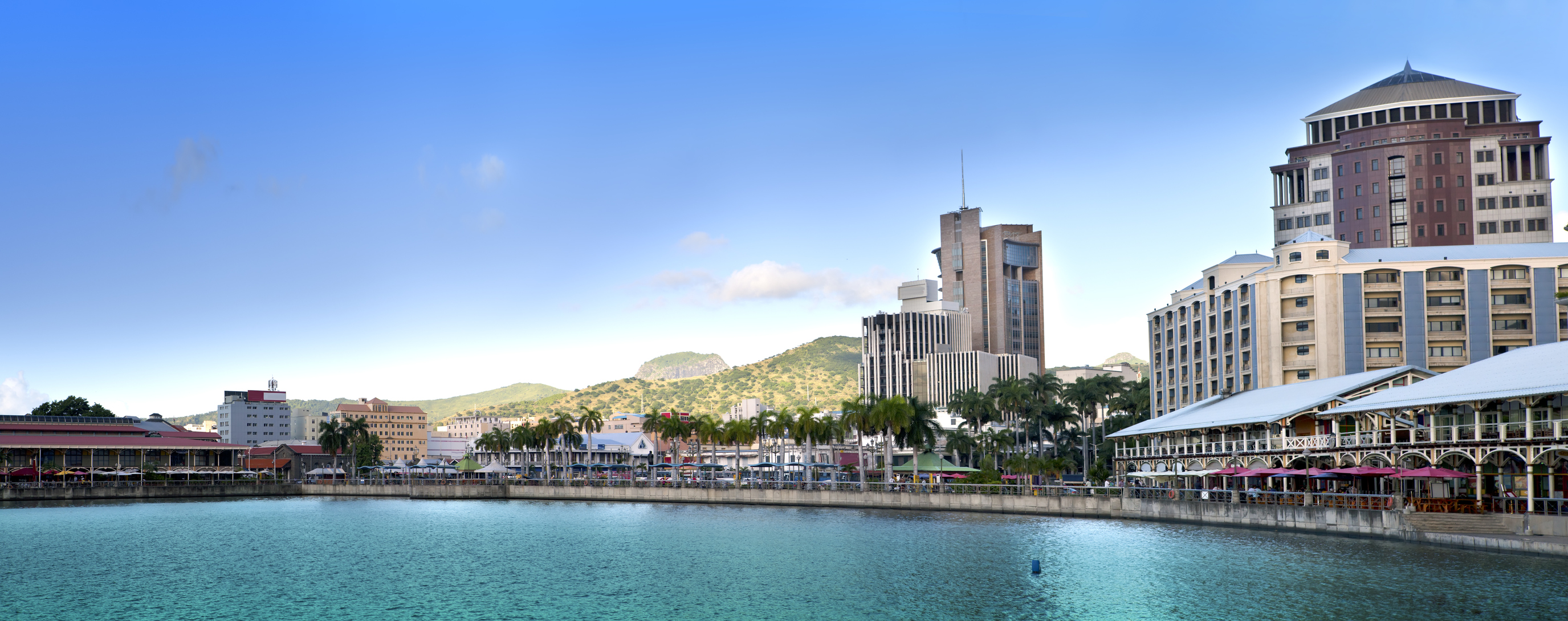
Mauritius’ financial centre has reached an unusual moment in its evolution. It is no longer a fragile offshore experiment, nor is it yet a fully-fledged decision-making hub in the mould of Dublin, Luxembourg, Dubai or Singapore. It sits somewhere in between: respected, increasingly diversified, and more visible internationally, but still searching for the depth of talent, capital and commercial activity that turns a jurisdiction from a place of incorporation into a place of conviction. The real question is no longer whether Mauritius can regulate an international financial centre (“IFC”). It can. The question is whether it can populate that IFC with enough talent, capital, decision-makers, products and entrepreneurial energy to become more than a jurisdiction of structures.
With a direct Gross Value Added (GVA) contribution to the national economy equal to Rs 79.6 billion in 2025, the financial services sector accounted for nearly a quarter of national economic output in 2025. The Mauritius IFC has experienced sustained growth in recent years, demonstrating resilience in the face of the pandemic-induced economic downturn.
In the 39th edition of its annual report, released in March 2026, the Global Financial Centres Index (“GFCI”) ranks Mauritius 50th globally, placing it just behind Doha and Casablanca but ahead of Taipei or Mumbai, with our jurisdiction having consistently improved its standing over recent editions of the index.
The GFCI further identifies Mauritius among the 15 IFCs which are most likely to grow in significance over the next two to three years and highlights the jurisdiction as an emerging global contender in terms of IFC profiling, meaning that Mauritius has sufficient connectivity with other financial jurisdictions and displays sufficient breadth and depth of financial service offerings to position itself as an emerging contender of leading IFCs in the years ahead.
These developments are not accidental: Mauritius has, in many respects, mastered the first stage of IFC-building: credibility. It has built legal continuity, regulatory familiarity, professional services capacity and a treaty network with real reach, including 45 Double Tax Avoidance Agreements (“DTAAs”) and 29 investment promotion and protection agreements (“IPPAs”) globally, including 16 DTAAs and 11 IPPAs across Africa.
Its hybrid legal system, drawing on both civil- and common-law traditions, has allowed it to speak fluently to investors operating across Africa, Europe and Asia. The appeal structure to the Judicial Committee of the Privy Council has also offered international users a measure of comfort on legal certainty and due process. Over the years, Mauritius has consistently aligned its regulatory framework with evolving international standards promoted by organisations such as the OECD, FATF, IMF and IOSCO.
The Ministry of Financial Services and Economic Planning correctly identified in its 2025-2030 strategy report the central challenge facing the jurisdiction: how to move from recognition to relevance through greater diversification, innovation, international reach and human capital development.
Diversification remains central to the Mauritius IFC strategy. The jurisdiction has substantially broadened its financial services offering over the past decade and no longer sees itself as a centre focused on cross-border investment or fund administration alone. One signal of this transition is the recent upward revision of FSC licensing fees. Whether intentional or not, the change reflects a financial hub increasingly competing on regulatory credibility, expertise and supervision, rather than on cost alone. As Mauritius expands into areas such as virtual assets, family offices, payment services, VCCs and investment management, regulatory sophistication becomes part of the product itself. In particular, the increase in fees applicable to Authorised Companies (by an approximate 300%) may encourage the establishment of structures with greater economic substance, scale or strategic value, and deter purely cost-driven incorporations.
While meaningful progress has been made to develop the service offerings listed above, this is where the real work begins to drive economic maturity in these and other segments (such as fintech or sustainable finance). While Mauritius has been largely successful in building the legal and regulatory framework of a modern IFC, the next challenge is tougher: building the commercial density and human capital concentration that turns a structuring jurisdiction into a place where substantial financial decisions are made.
Further legislative reforms, including proposed banking and startup-sector initiatives as announced in the recent Budget, may well strengthen the ecosystem. Decisions such as last week’s Cabinet approval of the country’s accession to the Convention on International Interest in Mobile Equipment (Cape Town Convention) represent positive policy signals toward capturing Mauritius’ potential as a financial centre, including in aviation finance.
Yet the principal challenge facing Mauritius is no longer legislative, but demographic and human. Private wealth management, fund management, structured finance and digital assets all depend on highly skilled professionals with expertise, client relationships and decision-making authority. Even fund administration and cross-border structuring, our traditional mainstays, require a new class of professionals to move up their value chain, including investment committees, PE and VC personnel. Without such talent, many structures risk remaining administrative platforms rather than operating businesses.
The talent challenge is particularly striking because Mauritius now finds itself competing in a global market for skilled professionals while simultaneously grappling with persistent economy-wide skills shortage. At precisely the moment when the IFC’s future hinges on attracting highly-skilled professionals, the country appears to increasingly focus on filling labour gaps through low-skilled migration. Both segments of the labour market matter, but only one of them will determine whether the Mauritius IFC becomes a genuine centre of financial decision-making.
The question is this: “Why would a successful wealth manager in Luxembourg, a capital markets lawyer in Dublin or a structured-finance banker in Singapore move to Mauritius?” That question lies at the centre of the substance debate. The honest answer is that Mauritius has some of the ingredients, but not yet the full proposition. Lifestyle, safety, political stability, strategic geography are real strengths. But the professionals who build IFCs are not tourists. They are career-driven, network-driven and opportunity-driven. Ultimately, talent follows opportunity. Professionals, including members of the Mauritian diaspora, will relocate where they see deep deal flow, ambitious employers, sophisticated counterparties, strong schools, reliable connectivity and a credible long-term career path. Building that environment is as crucial to the future of the IFC as any legislative reform.
A mature IFC is not simply a collection of licensed entities: it is a marketplace. It has banks willing to understand complex structures, fund managers originating and deploying capital, lawyers and accountants advising on complex transactions, regulators able to engage with innovation without compromising standards, universities producing relevant skills, and investors who see the jurisdiction as a place where judgment is exercised. Mauritius has many pieces of the jigsaw. The challenge now is density: enough participants, operating at sufficient scale, interacting often enough, to create a self-reinforcing financial ecosystem.
The path to substance is not elusive because it is mysterious, but because it is demanding. It requires Mauritius to compete not only for companies, but for people; not only for incorporations, but for decisions; not only for recognition, but for relevance. The next chapter of the Mauritius IFC will be written not by the number of structures it hosts, but by the quality of the financial activity it anchors.
--
Read the original publication at JuristConsult Chambers
.jpg)