
.png)
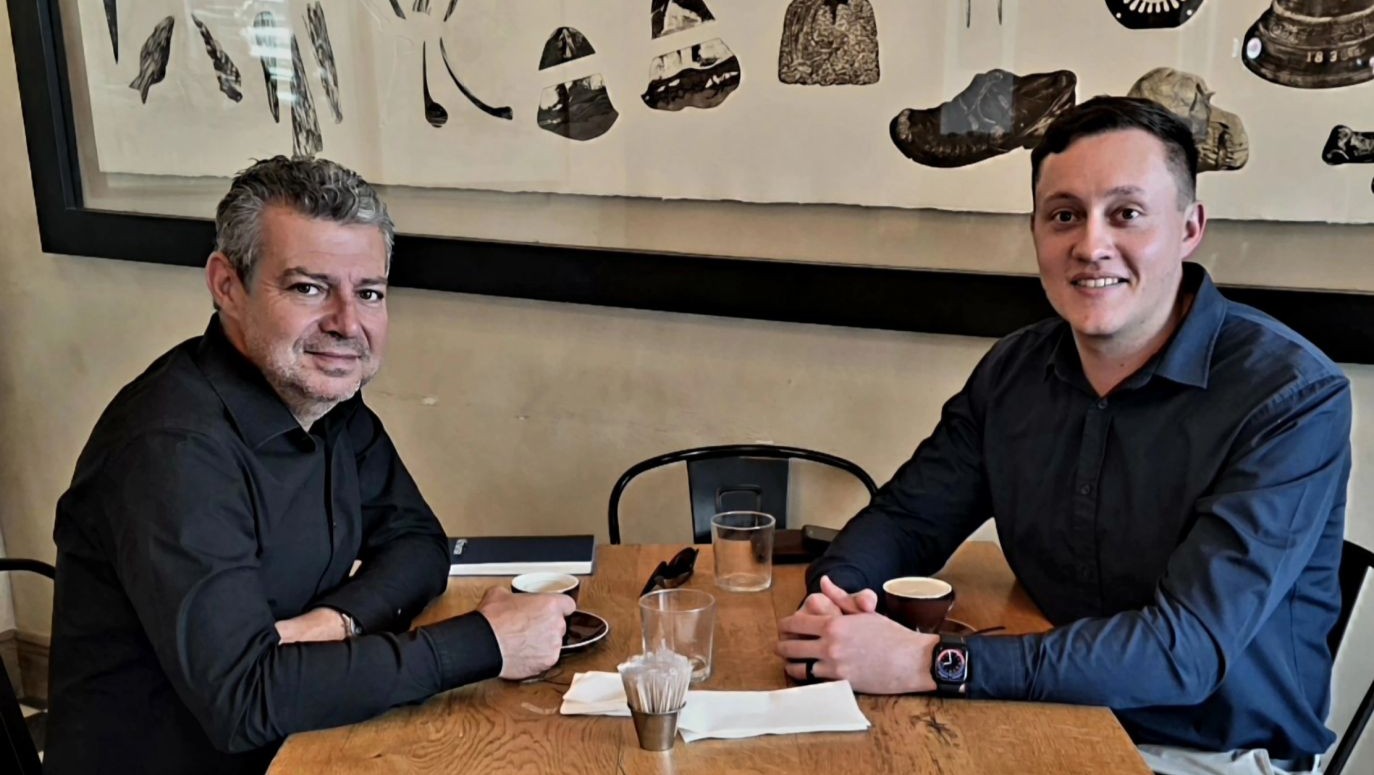
From scaling high-growth ventures to navigating complex multi-market expansions, Dawid Swart brings a rich blend of financial and operational expertise to his new role as Chief Financial Officer at Afriwise. In this Q&A, Dawid unpacks what drew him to legal tech, explains why understanding regulatory nuance is fundamental to deal economics across African jurisdictions, and shares how Afriwise is positioning its deep legal data and AI capabilities for rapid global growth.
Why Afriwise?
Of anywhere you could have joined, why a legal intelligence platform for African markets?
I’ve always been passionate about technology: how innovation can disrupt and improve an industry, and how it can solve genuinely complex problems and deliver something meaningful into a market. I started my career in financial services, and even back then I was watching what technology was doing in regtech, insurtech and fintech. I had a genuine appreciation for what disruptive technology can do to an industry and a sector. So legal tech was already an exciting space to me before Afriwise came along.
Before I joined, I spent a few months at a pan-African boutique law firm, and that’s where I saw the problem up close: how hard it actually is to identify and understand the laws and regulations across different countries, stay on top of what’s changing, and prove you comply. And it wasn’t only there. In previous roles, looking at vertical and horizontal expansion into other African countries, I experienced firsthand how difficult it is to identify and understand the applicable laws and regulations, stay up to date with them, and understand how they affect an investment opportunity or a business. So, I’d lived the problem before I met the solution.
The pan-African and global reach is part of it too. I like that this is built to scale. And I’ve got professional services experience to judge it against articles at PwC in South Africa and a short stint in Sweden, my own professional services business across South Africa, the UAE and Mauritius, then the pan-African law firm. So, when I look at where technology and AI are going to disrupt professional services, I’ve got an informed view, and legal is at the front of that queue.
What convinced you the opportunity here is real, not just interesting?
A large part of it came down to trust. I’ve got a strong relationship with Robert Nel, who was involved from early on, and I trust him and respect him a great deal. When he brought the opportunity to me, that alone counted for a lot.
Then, being a CFO, I did what a CFO does: due diligence on the business, the industry, the strategy. And I genuinely liked what I found. It was clear the team was onto something real, and I wanted to be part of it.
And then there were the conversations themselves: meeting Steven and some of the team, some briefly, some in more depth, and just enjoying the discussions. Call it a cliché, but sometimes things feel right, and I do believe things tend to happen the way they should. A lot of it lined up at the right time and moved quickly, and when that happens, when it feels right, moves fast, and everything checks out, I take that seriously.
What’s the single biggest thingthat made you say yes?
A lot of this is really answers one and two again. But if I isolate it: using software and a platform to deliver and monetise genuinely complex legal data, across a pan-African and global footprint, is a powerful proposition on its own. I think Afriwise is well placed to keep solving hard problems and keep shipping good products, and I’m genuinely excited about where AI takes that. I can already see the value it’s going to add in professional services, and specifically in legal.
There are still plenty of open questions, and this is early days. But I like the company, I like the story, I’ve enjoyed the people I’ve met, and I believe in the value proposition. That’s enough for me to want to be part of it for the long term and to help build it.
The Afriwise Bet
Afriwise is building the legal and regulatory backbone for doing business across 45+ African countries. As CFO, why does that matter commercially?
It matters because navigating the legal and regulatory landscape across the continent is exceptionally difficult, and that difficulty shows up directly in deal economics. If you’re trying to execute foreign direct investment, or any commercial activity, across multiple African jurisdictions, understanding the applicable laws, how they affect the structure of the deal, what needs to be complied with, and what that does to feasibility, is essential to the investment case.
I’ve felt this firsthand too, in previous roles looking at expansion into other African countries. It’s not an abstract compliance issue. It’s a real input into whether a deal or an investment makes commercial sense at all.
As a CFO, that’s just how I think about risk generally: exposure, likelihood, impact, a risk matrix, mitigations. Understanding the regulatory landscape, you’re investing into is part of understanding the commercial viability of the transaction itself. Afriwise is building that backbone across one of the hardest continents in the world to navigate legally. That’s exactly why it matters.
What’s the growth story you’remost excited to help write?
Legaltech and this AI moment are going to be genuinely disruptive to certain industries, and there’s a lot of change coming: some fast, some still shaking out. There’ll be bubbles and corrections along the way, and real questions about which AI companies have durable economics. But Afriwise is a data-first company, and to me AI and the platform are really the delivery mechanism: a way to make the data and the IP we’ve built more accessible to more users. That’s a powerful position to build from.
What excites me most is the pace. We’re thinking in weeks and months where a business like this would traditionally think in much longer horizons. I’m excited about the growth story on both an African and a global level, expanding what we cover, jurisdictionally and in content, into more countries. And I expect the team to grow with it. What excites me is that we get to do this as a tech-first company, leveraging every tool at our disposal to become a leading, data-driven legal tech company that delivers great products and great customer service.
Where do you see Afriwise in three years, and what’s your part in getting it there?
In three years, I see Afriwise significantly larger than it is today, having gone through a huge amount of growth. We want to be the leading legal tech business in Africa, hands down. And ambitiously, we want to expand beyond Africa too. Beyond that, I expect we’ll keep expanding vertically and horizontally, across jurisdictions and geographies, and into other products and services for our customer base.
My part in getting there isn’t exclusive to finance. It’s what I’ve learned operating at a leadership level in high-growth companies and departments before, with a particular focus on finance, operations, human capital, IT, risk, governance, and strategy. Systems, processes, people, and culture. Building a very solid foundation that can take advantage of a hypergrowth opportunity and helping build a sustainable business that can grow that quickly.
Dawid's Read on the Market
What do people get wrong about the commercial opportunities across the African continent?
There are a few things people consistently get wrong. First, they assume that because something works in a mature, developed market, it will work the same way in Africa. They import the playbook wholesale rather than testing whether the assumptions behind it hold on to the continent. Related to that: Africa isn’t one market. It’s 54 countries and several legal traditions, and regulators apply similar-sounding rules differently in practice, so a plan built for “Africa” rather than for specific countries is usually a plan that hasn’t been tested.
Second, people don’t take the time to understand local customs and ways of working before they enter a market. That is not a soft or secondary consideration. It’s central to whether you succeed here at all. Part of that is treating local partners as vendors instead of as the source of the real answer. The local firms we work with are where you find out how a regulator applies a rule, not just what the statute says, and that is often the part that matters most.
And third: people often don’t have access to, or a good understanding of, the laws and regulations in the countries they’re looking to operate in. So, they don’t know what’s applicable, they don’t know how to stay up to date with it, and as a result they don’t know how to comply or what the risks are. Most importantly, they don’t understand how that impacts the commercial opportunity itself, or how they could mitigate it when deciding whether to go ahead at all.
Why is now the moment for a company like Afriwise?
Beyond everything I’ve already said, the timing is right for a specific reason. This is not a business that started building today. Afriwise has spent years, with real institutional knowledge on the African continent, assembling detailed data and IP across dozens of jurisdictions and many different types of law. That is not fast to build, and it is not easily accessible from outside. That data and IP are where the actual value sits.
What has changed is that the tools to deliver it have caught up. Developments in SaaS, and now specifically in large language models and generative AI, mean Afriwise is perfectly placed to take that hard-won asset and put a genuinely strong product in front of the market. The content existed before the technology did. Now the technology exists too.
And I’d add this: anyone can build a demonstration of legal AI today. Very few have180+ partner-firm relationships across 45+ countries feeding it. The AI moment makes that distribution sharper as an advantage, not weaker. Ungrounded AI answers are now cheap and easy to produce, which makes verified, sourced content worth more, not less.
A Little About Dawid
What will you bring to Afriwise?
I’ll bring a skill set built in high-growth environments: from a boutique pan-African law firm, and before that playing a material part in scaling an energy fintech subscription platform. Beyond the track record, I think I bring something less tangible too: a fresh perspective, a new pair of eyes on the business, which isn’t necessarily a bad thing at this stage. And I want to contribute to a good culture and a good team, and back what I genuinely think is a massive opportunity for growth.
In practice, that’s meant making it a priority in these first weeks to properly get to know everyone on the team, not just names and titles, but who people are and how their role fits into the bigger picture, and to build a much more granular understanding of the products themselves.
First impression of the team
From my very first engagements with Steven and the rest of the leadership team, I’ve been impressed. Professional, welcoming, ambitious, focus-driven, and that held true across all the senior leadership I’ve interacted with, right across the world. The board and other key stakeholders gave me a genuinely warm welcome, which I appreciated.
One specific thing stood out: the team nailed remote onboarding. Getting properly set up, making sure everything worked, checking in regularly, offering help without being asked.
I’m still settling in, still meeting people, still have a lot to learn, but the first impression has been a strong one. I’ve appreciated the candour, the open discussions, and the willingness to help me get up to speed quickly. I’m genuinely excited for what’s ahead.
What’s on your desk that isn’t a spreadsheet?
Quite literally, my Ironman training programme and meal plan. I’m trying to stay as focused and dedicated as I can. I’ve got Ironman 70.3 Durban, the half Ironman, early June next year, and there’s a lot of work still to do on that front, so it genuinely sits on my desk between the work itself.
And next to that, a book called Survive the AI Apocalypse: A Guide for Solutions. It’s a very interesting one. Despite the title, it isn’t really about AI itself. It’s about surviving in a future that includes AI. Keen to get into it.
Quick-fire
Afriwise in one word
Formidable. It points at scale and difficulty overcome: the years of data and the partner-firm network behind the product, rather than reaching for the word every AI-driven legal tech company reaches for.
The number you’ll be watching most
ARR: Annual Recurring Revenue. The most important number in a legal fintech, data, and SaaS subscription business, without much debate.
One thing you want everycustomer to know
How deeply passionate this entire business is about the law, the content, and delivering what is a genuinely complex legal world in a powerful, usable way. And beyond that, how much the business cares about its customers: building deep, long-term relationships with customers, partners, stakeholders, and our own legal data supply chain. That combination is what makes the difference.
--
We hope you've enjoyed reading our interview. Feel free to reach out to Dawid and continue the conversation.

